Tarot Imagery: A Transformative Mirror to the Soul

Long before tarot was considered a divination tool, it was aimed at figuring out people and situations to understand better what happens and why. It has always been an excellent mirror to the soul, and the intricate tarot imagery serves as a key to deciphering those hidden patterns, sparking curiosity and a thirst for knowledge.

After reading this piece, you will understand why images in tarot are so important and why some tarot readers use different decks with varying designs.

Unveiling the power of Tarot imagery and the unconscious mind

Archetypes, as described by psychologist Carl Jung, are universal patterns that correspond to states of the human psyche. These primordial images are constantly found in myths and fairy tales because they are part of a collective unconscious. What tarot does with these archetypes is represent them in a card with deep meanings.

A combination of cards in a tarot shuffle reveals associations of different archetypes and their relationships. So, instead of reading them at first sight, why don’t we take a bit more time to examine the universal pattern they convey?

Doing so can help you transition from unconscious to conscious. Your inner world unfolds, and more than mere events and predictions, you gain insight into the patterns that hide within the fog of a complex mind and society.

But then, the same imagery that helped you figure out tarot readings may become a limited view because they often show an angle of a complex archetype that cannot be reduced to a simple image. That’s why most professional tarot readers buy additional decks with optional imagery. Connecting with new tarot images can help deepen your readings and understand the complexity of the archetype beyond a single representation.

How tarot reveals patterns and elevates consciousness

In a tarot card reading, each shuffle represents an intermediary between our inner world and the rational perception that turns everything into facts and figures. We can either go directly to events and the answers we’re looking for or give shape to emotions and thoughts that would otherwise remain hidden in the unconscious mind.

But even if you don’t have time for insightful reading and want a clear answer to show up and go on with your life, remember that there are thousands of possibilities behind each concise answer in tarot. What tarot shows are not hard facts but energies on the move, and images are a limited representation of such energies.

How to deepen tarot meanings and expand on each archetype

Most people start by learning tarot meanings and combinations with a classic maze such as Rider-Waite or Marseille. That’s perfectly fine because they contain many hidden gems readers will encounter in time.

But after you get used to them, why don’t you challenge yourself with a new deck with alternative imagery? Explore how such new imagery expands your understanding of the archetype, achieving slight modifications to your readings.

Once you get acquainted with a second maze, it will be easier to remember the representation of the same card in a different maze. Examine how such deepening of the arcane can change your understanding of the shuffle.

And if you want to go beyond representations, why don’t you try something new? Use a tarot maze with symbolic representations of each archetype instead of the usual scenery with characters and concise messages. Try these mazes when you feel ready for them, and experience how they expand your connection with your cards.

After a while, you will better understand archetypes beyond a simple representation, using different images to explore the various angles of each card. Continue practicing, and don’t forget to take extra time to investigate and ask profound and insightful questions.

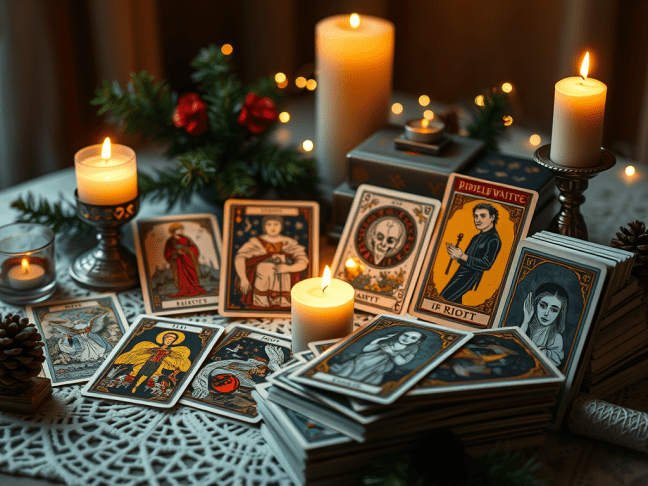
Top Tarot Decks for Holiday Gifting

In Tarot Place, we believe tarot is much more than just a set of cards. It is a tool to connect with the unconscious mind and deepen our self-awareness. In the right hands, it also offers valuable insights into the past, current, and future.

If you are learning to read tarot or are a seasoned tarotist, a beautiful deck is one of the best Christmas presents. Using an alternative set unlocks new layers of interpretation, enriching your views and readings.

Buying a new deck provides a new perspective on what you already do. That’s why we’ve curated incredible offers for the holiday season.

Exclusive Black Friday deals at The Tarot Place

Our store in Tarot Place has now made available a new offer coupon you can activate on your checkout. From November 17 until December 3, you’ll have a 15% discount on any sale over $50.

Use the code CYBER2024 at checkout to enjoy this holiday discount. It’s our gift for Christmas.

But after Christmas, you’ll get another deal to start the new year with a new oracle or tarot deck. You’ll have a 25% discount on any sale over $75 from December 25 to December 31.

Enjoy this special offer with the code ENDOFSEASONDEALS24. Use it at checkout before paying and save big for New Year’s Eve!

Tarot gift ideas for Christmas and New Year

Searching for the perfect gift for yourself or a loved one? Here’s what The Tarot Place has to offer this holiday season:

  • Basic tarot decks: The basic decks, including the Rider-Waite version, are here in different sizes and qualities in case you’re looking to renew your older set of cards. It is also the perfect gift as a starting set for someone you love.
  • Artsy and thematic tarot decks: A second deck can give you a new perspective based on the art in each card. Our product list includes thematic tarot decks like the Beetlejuice and Dracula decks. You’ll also have artsy alternatives like the Tarot of the Cosmic Seed.
  • A variety of oracles: These cards are perfect for guiding readings and enhancing meditation insights. They also follow themes such as the Sacred Spirit Oracle and the Buddhism Oracle.
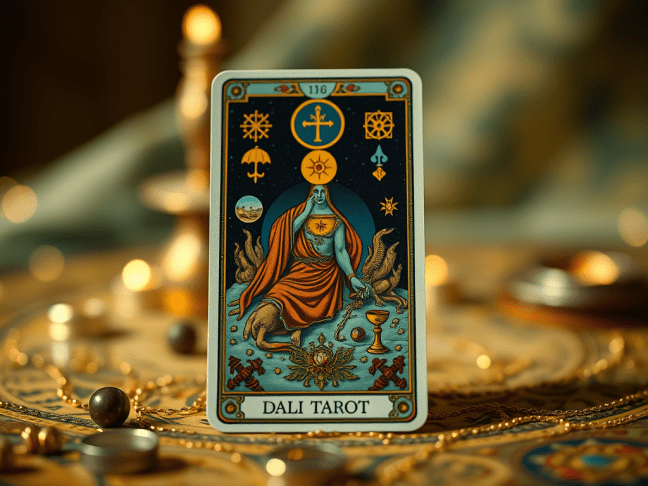
  • Limited and special editions: Explore rare gems like the Dalí Tarot, a stunning collection created by Salvador Dalí himself.

Why choose The Tarot Place for your spiritual journey

When you decide to buy a new Oracle or tarot deck, there are plenty of marketplaces and online stores to choose from. But here’s what differentiates The Tarot Place:

  • A curated list with the best items. We are not competing with others and prefer quality over quantity. We’re not selling a tarot deck that does not resonate with intuition.
  • Updated listings. We keep track of our stock and readily update our listings when an item becomes unavailable. We won’t notice an item is out of stock after you buy it.
  • Rapid and secure delivery. Your product will arrive securely at your door, and we’ll ensure the delivery is as swift as possible. No surprises.

By choosing us, you trust a marketplace that values your journey and supports your connection to the spiritual world. Now you have your discount coupons, how are you planning to use them?

https://www.adleinternational.biz

Dalí’s Surreal Tarot: Art and Insight Combined

Today, numerous contemporary artists have reinterpreted tarot cards, bringing unique styles and approaches to the famous Rider-Waite depictions. But what if you knew about a tarot card deck created by a celebrated artist like Salvador Dali?

Most of us have heard of Salvador Dalí, but not all know he was commissioned with a tarot card deck in the 1970s. He was hired to create a deck for a James Bond film, Live and Let Die. The project was not completed for the movie, but Dalí continued developing his tarot deck, which was then released in 1984.

It’s a must-have for any tarot reader who is also a fan of classic art, especially if they know the insights of the painter and his wife Gala. She was a significant influence on this project, adding layers of extra symbolism and depth to this impressive deck.

Surrealist art as a tool for tarot insight

When learning about tarot cards and how to perform readings, one of the most striking discoveries is how you can blend your reality into each card’s deep symbols and archetypes. Just imagine how mind-bending it would be if we had surrealist art depictions for the major and minor arcana.

Dalí’s Tarot is an interesting fusion of his work with other exponents of European painting, such as Botticelli and Velázquez. Ultimately, you get an original tarot deck with a strong artistic background and deep esoteric meaning.

One notable example is the portrayal of The Empress. In his version, Dalí includes elements from two Renaissance paintings that convey the meaning of beauty and abundance. Combined with Dalí’s surrealistic approach, it gives you a unique mystic vibe that also feels like an homage to art history.

The psychologic aspects of Dalí’s Tarot

Another salient aspect of Dalí’s Tarot is how it can help readers reach a new approach to the same archetypes. The most recent reprint of this tarot deck by TASCHEN comes with a handbook by tarot expert Johannes Fiebig. In his view, this deck was designed for an esoteric reading and a profound psychological introspection.

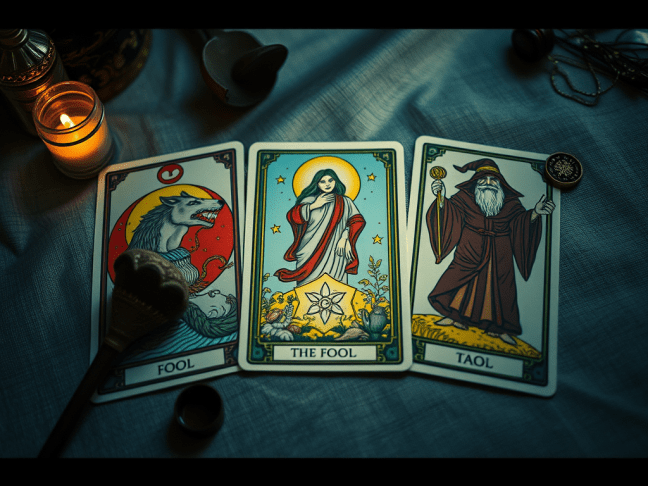
One example is The Fool, a card with an extra sense of duality in Dalí’s Tarot. The character embodies duality, appearing both as an explorer of an irrational world and a jester who defies universal laws. By itself, the drawing is an almost too direct invitation for self-discovery that constantly reminds us how wisdom can sometimes be intertwined with madness in our search for truth.

Dalí’s Tarot is not a conventional piece, and it’s much more than a stylish reimagining of the same Rider-Waite cards. It’s a surrealistic art piece that continues inviting tarot readers to explore a deeper esoteric and psychological meaning. The first edition of this deck is no longer available. That’s why TASCHEN now reprinted Dalí’s Tarot Multilingual Edition by Johannes Fiebig, with all 78 cards in a fresh celebration of Dalí’s inimitable custom set.

The work was published in a limited art edition in 1984 that has since long sold out, making Dalí the first renowned painter to create a completely new set of cards. Drawing on Western masterpieces from antiquity to modernity (including some of his own), Dalí seamlessly combined his knowledge of the arcane with his unmistakable wit. The result is a surreal kaleidoscope of European art history.

TASCHEN resurrects all 78 cards in a fresh celebration of Dalí’s inimitable custom set, complete with a booklet by renowned German tarot author Johannes Fiebig offering an introduction to Dalí’s life and the project’s making-of, a comprehensive explanation of each card’s composition, its meaning, and practical advice, step-by-step instructions on how to perform readings, and a jargon-free approach simplifying tarot for the newcomer.

https://www.adleinternational.biz

Herbal Archetypes: Unlocking Plant Personalities for Wellness

Plants are alive: Unveiling herbal archetypes

Despite their differences, witchcraft, alchemy, shamanism, and modern chemistry share a common foundation. They use plants to unlock the mysteries of life.

Many pharmaceutical products originate from herbal remedies put to the test. However, they lack the nuanced qualities of the actual plant.

Indeed, plants have a personality. That’s why they sometimes “get along” with us and treat a disease. But others may not experience the same effects..

So, how can you understand plants and their character? One way to do so is learning about their hidden archetypes.

The symbolic language of herbal archetypes

Each plant holds a unique symbolic meaning. Besides nurturing and healing, they also contain a type of energy and a lesson to teach. Some of these energies can be linked to tarot cards and their archetypes.

A fascinating example to illustrate the point is hemlock. It is a tall and upright plant with toxic properties. Its form and biological effects show rigidity and protection, just like The Emperor card.

Hemlock protects itself against predators with poisonous chemicals. It has an upright form that does not yield. These features help the plant survive in the wild, but taken to an extreme they won’t let us relate to its virtues. 

Similarly, authoritative and close-minded people may seem challenging to approach. But they are probably highly protective towards their loved ones.

Alfalfa is a completely different plant. It easily thrives in diverse environments. However, it is also adaptable and friendly for animals who want to feed from it and spread its seeds in return.

Alfalfa exemplifies resilience and inner strength in trying times. This aligns to the feeling behind the Ten of Swords, and how it comes across suffering. But after such difficult times when nothing can be worse, the future will shine brighter if we keep at it.

Using herbs for enhanced self-awareness

Throughout history, herbs have been used not only to cure disease but also as means to accessing our subconscious mind. Even now, many use herbal preparations as an introduction to alternate forms of spirituality.

Understanding how herbs relate to archetypes will let us explore different combinations to boost our self-discovery journey. It can also be a wonderful tool to find new herbal remedies through their synergistic energies.

That’s another common trait between herb-crafting and tarot. We can use them for personal growth, and they work even better combined with one another. It’s a beautiful art involving life itself and the hidden meaning behind plants.

Exploring these topics may seem daunting at first. But if you want an accessible entry point, The Herbcrafter’s Tarot is an excellent option. It was developed by Latisha Guthrie with illustrations by Joanna Powell Colbert. The author is a long-time blogger who skillfully explains each plant trait in the accompanying guidebook. 

This wonderfully illustrated deck shows the usual tarot archetypes and their herbal correlations. The deck goes beyond common herbs and includes less-known plants like chaparral, making it an excellent option to explore for both experts in herbal remedies and newcomers alike.

https://www.adleinternational.biz

Exploring Folktales Through Tarot Interpretations

Few relics from the past are as enigmatic and ripe for deep research as folktales. Some of these may seem quite simple, but there’s a reason why they remained engraved in our minds and cultures.

Folktales cover fundamental topics such as growth, pain, love, and transformation. So, how can we examine them under the scope of tarot readings?

In this article, we will cover some popular fairy tales and myths and how they relate to tarot.

Innocence and adventure in folktales and tarot

The fool is one of the most popular cards in tarot. Similarly, innocence and adventure are fundamental themes in fairy tales such as The Little Mermaid or Jack and the Beanstalk.

These stories have in common a main character that is innocent and unguarded against the perils of the real world. The little mermaid, for example, travels to an unknown world awaiting for a different life. She has no clue as to what it will mean for her in the future but still takes the risk.

For tarot readers, that describes the archetype of the fool. This archetype does not necessarily represent a naive character. What’s more important, The Fool is prepared for transformation and change in a daunting road.

Duality and evil and what they can teach us

The fool’s journey can be found in nearly every folktale, often linked to themes of duality. There’s always an evil counterpart lurking behind the scenes. A great example of that would be the Little Red Riding Hood and the wolf.

Here, the wolf can easily be linked to The Devil. It’s not only a shadow of greed and desire. It also represents the temptation to fall to the material world and slavery to one’s desires.

But is there a way to integrate duality into a single symbol? Beauty and the Beast is a great example filled with symbolic meaning. It is the perfect example of how animal instinct and human reason can find a middle way. 

In tarot, The Lovers card holds similar symbolism. Beyond romance, The Lovers represents a decision being made. It is also a confrontation between our minds and heart, and how the result affects what we choose to do.

Transformation under the mage’s wand

The Mage is another popular tarot archetype with parallels to figures such as the Wizard of Oz or Aladdin’s genie. These mighty beings are there to uncover the arcane truth about the occult and transformation.

In tarot, The Mage is all about dominion of the elements and being able to transform your desires into action. We can find a similar role in alchemists, genies, fairies, and wizards all about the fairy tale worlds.

There’s much more to learn by delving deeper into popular narratives, fairy tales and folk stories. For instance, we can mention the less known story about Hinemoa and Tutanekai and how it relates to The World.

This theme is beautifully portrayed in Yoshi Yoshitani’s Tarot of the Divine: A Deck and Guidebook Inspired by Deities, Folklore, and Fairy Tales from Around the World.

So, if you like folk tales and tarot, you’ll appreciate the deck’s vibrant art, and the accompanying 44-page guidebook, which contains the myth of Oedipus from Greece, Fenrir’s legend from Norway, Japan’s Crane Wife, among others.

https://www.adleinternational.biz

Exploring the Symbolism of Water in Life

More than a life symbol: The deep meanings behind water

More than half the human body is made up of water. Apart from flowing through our veins, this mystical fluid has long transcended time as a symbol of life, connection, and emotions.

The deep meanings hiding behind its transparent mass extend far and wide into different aspects of life. Breaking water marks the start of birth, running water symbolizes letting go, restless waters are linked to emotional turmoil. But when water is calm, its reflection shows reality clearly and without filters.

With such diverse meanings, this element deserves more than a simple mention in our tarot and oracle readings. So, let’s go through some applications of water symbology that people usually overlook.

Basic understanding of water as a symbol

We don’t need a solid background in tarot reading and esoteric symbols to be acquainted with the usual meanings of water:

  • Water is associated with cleansing and renewal. It wipes out negative energies and leaves burdens in the past, allowing for a fresh start.
  • Water is deeply associated with the emotional world and intuition. It is the element behind the Suit of Cups in tarot and symbolizes relationships, emotional states, and psychic awareness.
  • When water energies are skillfully directed, they promote emotional restoration. It is a symbol of gentle healing as opposed to aggressive or forceful attempts to correct flaws and defects.
  • When water is calm, it serves as a reflection or mirror. It helps us see deeper truths, offering clarity and insight into both our inner and outer worlds.

Diving deeper into its applications

Water meanings listed above are elementary but equally powerful. However, there are more profound meanings once we understand the basics:

  • Water as transformation and alchemy: This element plays a fundamental role in ancient magic. In the alchemical process, water breaks down rigid structures allowing for change and transformation. It promotes refinement and enlightenment to materials and our own ego.
  • Water as an eternal cycle: Water continuously moves through evaporating, condensing, falling, and flowing. This fact has a deep meaning to it. It symbolizes the eternal cycle of life, death, and rebirth. It is also a reminder of impermanence and gives us the strength to let go.
  • Water as a boundary or crossing point: When depicted as a mass of water, as in a lake or ocean, it also marks a boundary for continents, people, and civilizations. Moreover, it’s a crossing point to our inner self, the subconscious mind, and everything that lies deep within.

We could endlessly explore the meanings of water, adding layer after layer of new depths. Entire books can be published to cover the topic, which is why Rebecca Campbell has recently devoted her most recent oracle to delve into the topic.

Her “Healing Waters Oracle: A 44-Card Deck and Guidebook” can be a good start if you want to explore the deep meanings of water applied to your inner self and growth. The guidebook offers not only a list of meanings but also insights into the esoteric applications of water, a basic element linked to life itself.

Creating a safe environment: How to cultivate well-being in the workplace

Some people spend most of the day at work. But even if it’s just a few hours with your co-workers, it’s easier to do so in a comfortable and safe place.

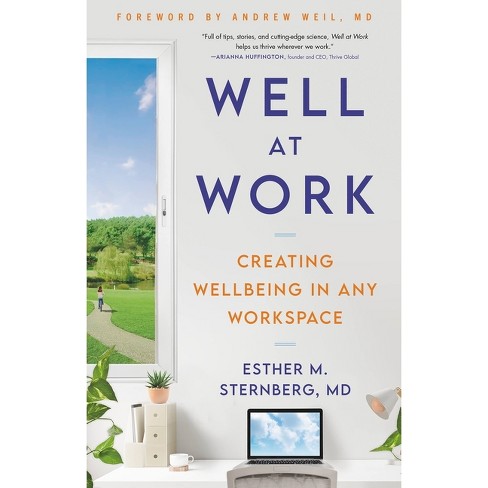
Workplace safety and wellness are critical to effective work performance. That’s the focus of the book “Well at Work: Creating Wellbeing in Any Workspace“.

Whether in the role of boss or employee, we can do many things to improve the work environment. But keep in mind that, like a plant, well-being in the workspace requires ongoing care, as you’ll see below:

Choose seeds and nurture the roots of wellness

A big tree grows from a small seed and is founded on its roots. In the workplace, the seed of wellness is mental health, and the root is the commitment to maintain it.

Once we learn to cope with stress, we will be able to do so at work and everywhere else. Communication skills make us more assertive in achieving our goals. All of this contributes to feeling fulfilled and happy.

Mental health programs and workshops are very useful for this. A coaching session or something as simple as a self-esteem session can make all the difference.

But it is also important for employees to be willing and collaborative. This is a two-way job.

Recognize the right nutrients: light and water

Following the comparison with gardening, a great tree thrives on an adequate supply of light and water. In work wellness, the main nutrients are ongoing improvement and personal recognition.

By ongoing improvement, we want to expand our skillset and learn. If we contribute to it every day, it makes us feel more confident.

Employers can help in the process by providing training opportunities. But there is also self-learning, which is very important to keep growing.

On the other hand, continuous personal recognition is also important. That is, constantly recognizing the positive fruits of our work. By doing so, we can keep up our motivation and inspire our employees.

There are two types of recognition: from ourselves and from others. Everyone makes mistakes. Instead of pointing them out, let’s adopt a positive culture. Let’s see and celebrate our successes.

Sometimes you need to prune and spray for pests

A third important component of growth is to evaluate and make changes. This applies to both gardening and creating your workspace.

First of all, we have feedback, which helps us pinpoint potential improvement. Providing these recommendations constructively makes them easy to follow and contributes to everyone’s well-being.

Secondly, we have the identification of workplace pests: work-related stress. It is normal to feel stress, and some jobs are more complex than others.

But can we do anything to reduce it? What strategy can facilitate the work and accelerate the results?

Burnout is a common problem in some stressful workplaces. It can often be avoided with something as simple as learning to delegate and working as a team.

Conclusion

Cultivating a safe and comfortable workspace is a slow and ongoing process. However, just like a large tree that bears shade and fruit, it is well worth the effort.

To do this we will need strong seeds and roots, by working on mental health. We must provide the right nutrients, including training and personal recognition. Then, pruning and spraying are necessary through feedback and correction of work-related stress.

When Memories Fade: The Unseen Toll of Alzheimer’s on Caregivers

Most of us can empathize with the daunting task of living with a relative afflicted by Alzheimer’s. But very few truly comprehend what it involves and how it feels.

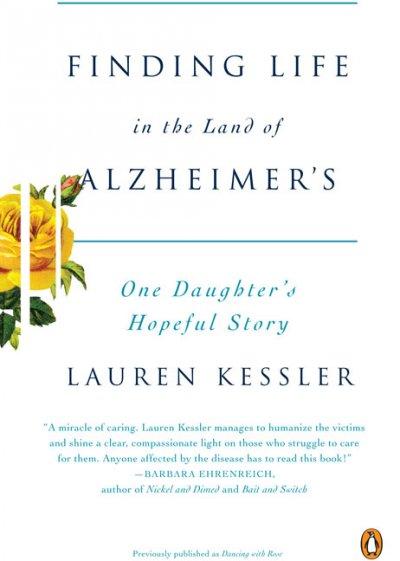
There’s no one better than an actual caregiver to tell us about it, as in the book “Finding Life in the Land of Alzheimer’s: One Daughter’s Hopeful Story.”

Far from adopting a gloomy outlook, Lauren Kessler offers us an uplifting and heartfelt narrative that shares a compassionate light on dementia.

Indeed, caring for a relative with Alzheimer’s is a herculean undertaking that many children and grandchildren don’t choose voluntarily. The disease does not come knocking at the door but barges into our lives uninvited and without concession.

That’s why it’s paramount to safeguard our mental health while in this endeavor.

Sacrifices for the greater good

Alzheimer’s is like an uninvited intruder that completely changes family dynamics.

One could say that the Alzheimer’s patient is the sufferer. However, the entire nuclear family takes the hit as well. Supporting loved ones with this debilitating disease entails three types of sacrifice:

  • An emotional sacrifice: Certainly, watching your father, mother, uncle, or grandparent succumb to the clutches of Alzheimer’s disease is a heart-wrenching ordeal. Seeing their functions deteriorate is frustrating, much more so if you can’t communicate. At some point, you may suppress your emotions, and your role becomes only that of a caregiver.
  • A physical sacrifice: Caregivers also have a physical burden, especially in the advanced stages of the disease. Moving patients, transporting them, enduring sleepless nights, and coping with ceaseless stress can affect your health.
  • A financial sacrifice: Alzheimer’s is also a financial quagmire. In addition to medications and doctor’s appointments, caregivers sometimes have to sacrifice their formal work. Often it is, in itself, a full-time job.

But does it have to be this way?

Efficient organization among relatives and caregivers reduces the burden considerably. Granted, not everyone may feel the same depth of compassion. But it is also true that every caregiver deserves respite, regardless of their devotion and love for their relative.

The cry for help

The rigors of living with Alzheimer’s disease can have a profound impact.

A study published in the Clinical Gerontologist Journal followed 226 Alzheimer’s patients and their families for five years. At the end of the study, 60% of the caregivers showed symptoms of depression.

These symptoms worsened over the years. And once depressed, less than 10% of the caregivers improved their symptoms. That is why you should seek assistance before the weight of the burden spreads to other family members.

There are ten telltale symptoms of caregiver stress:

  • Denial, as they most likely assume that the illness is not that serious.
  • Anger, sometimes directed toward other family members, the caregiver himself, and even the person with dementia.
  • Social isolation, as they no longer enjoy the activities they used to love.
  • Anxiety about everyday situations, and that which could happen in the future.
  • Sadness, which often manifests as indifference or lack of energy.
  • Insomnia, as even sleep becomes stressful and nightmares may occur.
  • Irritability, with emotional reactions becoming much more exaggerated.
  • Lack of concentration, especially on complex tasks, and problem-solving difficulties.
  • Health problems, such as getting sick more often or developing more serious, chronic ailments.

If you experience these symptoms, start taking action to mitigate stress.

Take a realistic view of the disease. Evaluate what you can do and know your limitations. If you have conflicting feelings, the first step is to accept them. Then, talk about them with someone you feel comfortable with.

Seek out a support group or health professional and be sure to ask for help. There are many online resources, support groups, and places to go for help. Take your time, and explore your available options with a healthcare expert. Remember that help is always within reach.

https://www.adleinternational.biz

The mind unveiled: Explore the depths of your brain

The enigmatic realm of the brain perplexed philosophers and scientists for millennia. That’s the topic covered by the celebrated book “We Are Our Brains: A Neurobiography of the Brain, from the Womb to Alzheimer’s.” 

Today, we have more tools and technology to unravel this cosmic conundrum, But many questions remain unanswered. In some cases, space exploration might seem easier than understanding our brains.

Still, science has made some impressive leaps and bounds, and today, we have fascinating data on brain function. Here are just a few of those thrilling brainy tidbits.

Brain and behavior across different life stages

At birth, the brain has approximately 100 billion neurons. Thus, the grand pregnancy marathon requires producing over 250,000 nerve cells per minute.

What happens after that?

The child’s brain

Right from the start, the brain is one of the most demanding organs. And it continues to be so throughout childhood and adolescence.

It gradually gives rise to a defined personality, a distinct personality, very particular tastes, and a highly variable set of talents and skills.

Brain changes through adolescence

However, the most radical transformations occur during adolescence. Hormones waltz onto the scene and modulate nerve interactions. The pre-frontal cortex transforms and develops further.

And there’s a societal rollercoaster that brings new pressures and experiences upon us. It is the perfect recipe to awaken the seeds of rebellion in the search for one’s own identity.

The brain in adulthood

And then adulthood arrives. Contrary to popular belief, it is not a snooze fest. The brain continues to change during this stage. That’s neural plasticity, and it never stops.

We keep producing new nerve cells and forging fresh connections. It is a perfect time to develop our full potential. But some of us stumble into an identity crisis, especially if we haven’t explored our talents and passions in life.

Seniors and cognitive decline

After hitting the golden years, the brain does not behave as many people think. Despite cognitive decline, old age is a time of consolidation.

All the experience we have accumulated over a lifetime becomes our little treasure trove of wisdom. It is a testament to the brain’s ability to grow and develop.

The brain’s role in health and disease

Over the years, the brain is subject to one wave of neurotransmitters after another. Sometimes, they work together as a symphony of neural fireworks. Other times, chaos arises due to a chemical excess or deficiency.

Brain disturbances may strike us. Count in clinical depression and maybe even hallucinations. What they have in common is altered brain chemistry.

But we don’t have to go very far to explore brain chemistry changes. A day-to-day example is stress, which raises cortisol and adrenaline levels. The entire body is put into a state of “fight or flight” because of a thought that went rogue. That’s why mental health is more than a sidekick. It defines and impacts our overall wellness.

Likewise, a good diet and healthy habits are pivotal. They protect us from neurodegenerative diseases such as Alzheimer’s and Parkinson’s disease.

These diseases throw a wrench into your nerve impulses and destroy your neurons. All this results in cognitive deficits and severe long-term problems.

Harnessing knowledge about yourself and your brain

Yes, the brain is an intriguing field of study. But why dive into its depths beyond a simple thirst for knowledge?

After knowing how the fetus is churning out nerve cells every minute, a mother may put more interest in nutrition. We might reconsider our junk-food-filled, overburdened lifestyles after a view at its long-term effects. Understanding the adolescent brain will help us understand the changes our teens are going through. The journey through the brain can be much more than just a random curiosity.

If this short read was interesting, many aha moments are ahead in “We Are Our Brains: A Neurobiography of the Brain, from the Womb to Alzheimer’s.” It is one of the most famous books by the Dutch neurobiologist D. F. Swaab. This must-read can be the first step to learn about yourself and take action to prevent future brain diseases.

https://www.adleinternational.biz

Simple Everyday Practices To Boost Your Brain

In today’s fast-paced world, you may find yourself running from one task to the other. There is just so much to do and so little time to do it in. As such, it is easy to become overwhelmed and distracted by the constant bombardment of information and demands on your time. This can lead to fatigue, lack of focus, and even mood swings.

Fret not, though! There are many simple practices you can instill in your everyday life that will help you navigate the complexities of the modern world. These practices might seem trivial, but they add up over time to improve your brain health and your overall well-being. Let’s take a look at some of them below.

1) Start Your Day with Exercise

In the past decade or so, most people have become aware of the incredible positive impacts of exercising. It is not only a boon for your physical health but also your mental and emotional health. When you get some physical movement first thing in the morning, it can help wake up your brain and provide an energy boost. Even something as simple as jogging can help release feel-good hormones and improve your mood and focus.

2) Eat A Healthy Breakfast

Probably everybody’s parents taught them the value of a healthy breakfast. It not only fuels your brain for the entire day but also improves your mood. Foods like whole grains, fruits, and nuts provide important vitamins and minerals that can improve memory and focus. So, make sure you eat the right breakfast no matter how busy your schedule is.

3) Take Regular Breaks

We, humans, are biological beings. Even though we sometimes think of ourselves as machines, the truth doesn’t change. As such, we need breaks from time to time to recharge physically and mentally. So, it’s a good idea to take short breaks throughout the day. This can help improve focus and reduce stress. You could try taking a five-minute break every hour to stretch, meditate, or take a short walk.

4) Stay Hydrated

Water is an essential ingredient of good mental health that a lot of people underestimate. Did you know that even mild dehydration can cause headaches and lead to fatigue? This is why it is important to drink plenty of water throughout the day. It can help keep your brain hydrated and improve cognitive function.

5) Practice Mindfulness

Mindfulness is one of the best spiritual practices you can incorporate into your daily life. Like meditation and yoga, it can reduce stress and improve your focus. It can also help keep your attention in the present moment, which can improve your productivity and happiness. You can try practicing mindfulness for a few minutes daily and slowly increase the duration.

6) Challenge Your Brain

Like any other muscle in your body, your brain becomes stronger when you put it through challenges. This is why engaging in mentally stimulating activities is a great way to enhance your cognitive functions. To that end, you could spend some time every day solving puzzles or learning a new skill. This can help improve memory and focus.

These are just some of the daily practices you can instill in your life to change your brain for the better. In his book, “Change Your Brain Every Day: Simple Daily Practices to Strengthen Your Mind, Memory, Moods, Focus, Energy, Habits, and Relationships,” Dr. Daniel G. Amen talks about many more effective daily habits that can help you master your mind, boost your memory, and make you feel happier, healthier, and more connected to those you love.