

When Memories Fade: The Unseen Toll of Alzheimer’s on Caregivers

Most of us can empathize with the daunting task of living with a relative afflicted by Alzheimer’s. But very few truly comprehend what it involves and how it feels.

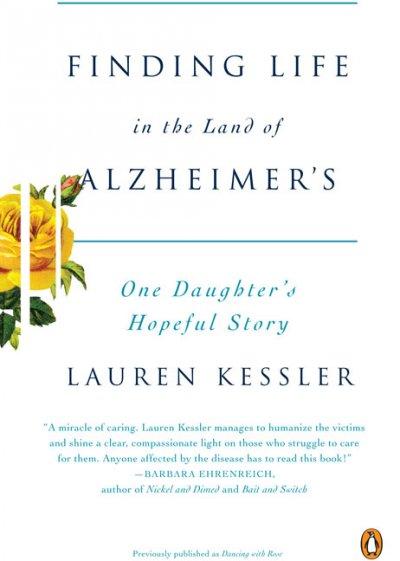
There’s no one better than an actual caregiver to tell us about it, as in the book “Finding Life in the Land of Alzheimer’s: One Daughter’s Hopeful Story.”

Far from adopting a gloomy outlook, Lauren Kessler offers us an uplifting and heartfelt narrative that shares a compassionate light on dementia.

Indeed, caring for a relative with Alzheimer’s is a herculean undertaking that many children and grandchildren don’t choose voluntarily. The disease does not come knocking at the door but barges into our lives uninvited and without concession.

That’s why it’s paramount to safeguard our mental health while in this endeavor.

Sacrifices for the greater good

Alzheimer’s is like an uninvited intruder that completely changes family dynamics.

One could say that the Alzheimer’s patient is the sufferer. However, the entire nuclear family takes the hit as well. Supporting loved ones with this debilitating disease entails three types of sacrifice:

  • An emotional sacrifice: Certainly, watching your father, mother, uncle, or grandparent succumb to the clutches of Alzheimer’s disease is a heart-wrenching ordeal. Seeing their functions deteriorate is frustrating, much more so if you can’t communicate. At some point, you may suppress your emotions, and your role becomes only that of a caregiver.
  • A physical sacrifice: Caregivers also have a physical burden, especially in the advanced stages of the disease. Moving patients, transporting them, enduring sleepless nights, and coping with ceaseless stress can affect your health.
  • A financial sacrifice: Alzheimer’s is also a financial quagmire. In addition to medications and doctor’s appointments, caregivers sometimes have to sacrifice their formal work. Often it is, in itself, a full-time job.

But does it have to be this way?

Efficient organization among relatives and caregivers reduces the burden considerably. Granted, not everyone may feel the same depth of compassion. But it is also true that every caregiver deserves respite, regardless of their devotion and love for their relative.

The cry for help

The rigors of living with Alzheimer’s disease can have a profound impact.

A study published in the Clinical Gerontologist Journal followed 226 Alzheimer’s patients and their families for five years. At the end of the study, 60% of the caregivers showed symptoms of depression.

These symptoms worsened over the years. And once depressed, less than 10% of the caregivers improved their symptoms. That is why you should seek assistance before the weight of the burden spreads to other family members.

There are ten telltale symptoms of caregiver stress:

  • Denial, as they most likely assume that the illness is not that serious.
  • Anger, sometimes directed toward other family members, the caregiver himself, and even the person with dementia.
  • Social isolation, as they no longer enjoy the activities they used to love.
  • Anxiety about everyday situations, and that which could happen in the future.
  • Sadness, which often manifests as indifference or lack of energy.
  • Insomnia, as even sleep becomes stressful and nightmares may occur.
  • Irritability, with emotional reactions becoming much more exaggerated.
  • Lack of concentration, especially on complex tasks, and problem-solving difficulties.
  • Health problems, such as getting sick more often or developing more serious, chronic ailments.

If you experience these symptoms, start taking action to mitigate stress.

Take a realistic view of the disease. Evaluate what you can do and know your limitations. If you have conflicting feelings, the first step is to accept them. Then, talk about them with someone you feel comfortable with.

Seek out a support group or health professional and be sure to ask for help. There are many online resources, support groups, and places to go for help. Take your time, and explore your available options with a healthcare expert. Remember that help is always within reach.

https://www.adleinternational.biz

The mind unveiled: Explore the depths of your brain

The enigmatic realm of the brain perplexed philosophers and scientists for millennia. That’s the topic covered by the celebrated book “We Are Our Brains: A Neurobiography of the Brain, from the Womb to Alzheimer’s.” 

Today, we have more tools and technology to unravel this cosmic conundrum, But many questions remain unanswered. In some cases, space exploration might seem easier than understanding our brains.

Still, science has made some impressive leaps and bounds, and today, we have fascinating data on brain function. Here are just a few of those thrilling brainy tidbits.

Brain and behavior across different life stages

At birth, the brain has approximately 100 billion neurons. Thus, the grand pregnancy marathon requires producing over 250,000 nerve cells per minute.

What happens after that?

The child’s brain

Right from the start, the brain is one of the most demanding organs. And it continues to be so throughout childhood and adolescence.

It gradually gives rise to a defined personality, a distinct personality, very particular tastes, and a highly variable set of talents and skills.

Brain changes through adolescence

However, the most radical transformations occur during adolescence. Hormones waltz onto the scene and modulate nerve interactions. The pre-frontal cortex transforms and develops further.

And there’s a societal rollercoaster that brings new pressures and experiences upon us. It is the perfect recipe to awaken the seeds of rebellion in the search for one’s own identity.

The brain in adulthood

And then adulthood arrives. Contrary to popular belief, it is not a snooze fest. The brain continues to change during this stage. That’s neural plasticity, and it never stops.

We keep producing new nerve cells and forging fresh connections. It is a perfect time to develop our full potential. But some of us stumble into an identity crisis, especially if we haven’t explored our talents and passions in life.

Seniors and cognitive decline

After hitting the golden years, the brain does not behave as many people think. Despite cognitive decline, old age is a time of consolidation.

All the experience we have accumulated over a lifetime becomes our little treasure trove of wisdom. It is a testament to the brain’s ability to grow and develop.

The brain’s role in health and disease

Over the years, the brain is subject to one wave of neurotransmitters after another. Sometimes, they work together as a symphony of neural fireworks. Other times, chaos arises due to a chemical excess or deficiency.

Brain disturbances may strike us. Count in clinical depression and maybe even hallucinations. What they have in common is altered brain chemistry.

But we don’t have to go very far to explore brain chemistry changes. A day-to-day example is stress, which raises cortisol and adrenaline levels. The entire body is put into a state of “fight or flight” because of a thought that went rogue. That’s why mental health is more than a sidekick. It defines and impacts our overall wellness.

Likewise, a good diet and healthy habits are pivotal. They protect us from neurodegenerative diseases such as Alzheimer’s and Parkinson’s disease.

These diseases throw a wrench into your nerve impulses and destroy your neurons. All this results in cognitive deficits and severe long-term problems.

Harnessing knowledge about yourself and your brain

Yes, the brain is an intriguing field of study. But why dive into its depths beyond a simple thirst for knowledge?

After knowing how the fetus is churning out nerve cells every minute, a mother may put more interest in nutrition. We might reconsider our junk-food-filled, overburdened lifestyles after a view at its long-term effects. Understanding the adolescent brain will help us understand the changes our teens are going through. The journey through the brain can be much more than just a random curiosity.

If this short read was interesting, many aha moments are ahead in “We Are Our Brains: A Neurobiography of the Brain, from the Womb to Alzheimer’s.” It is one of the most famous books by the Dutch neurobiologist D. F. Swaab. This must-read can be the first step to learn about yourself and take action to prevent future brain diseases.

https://www.adleinternational.biz